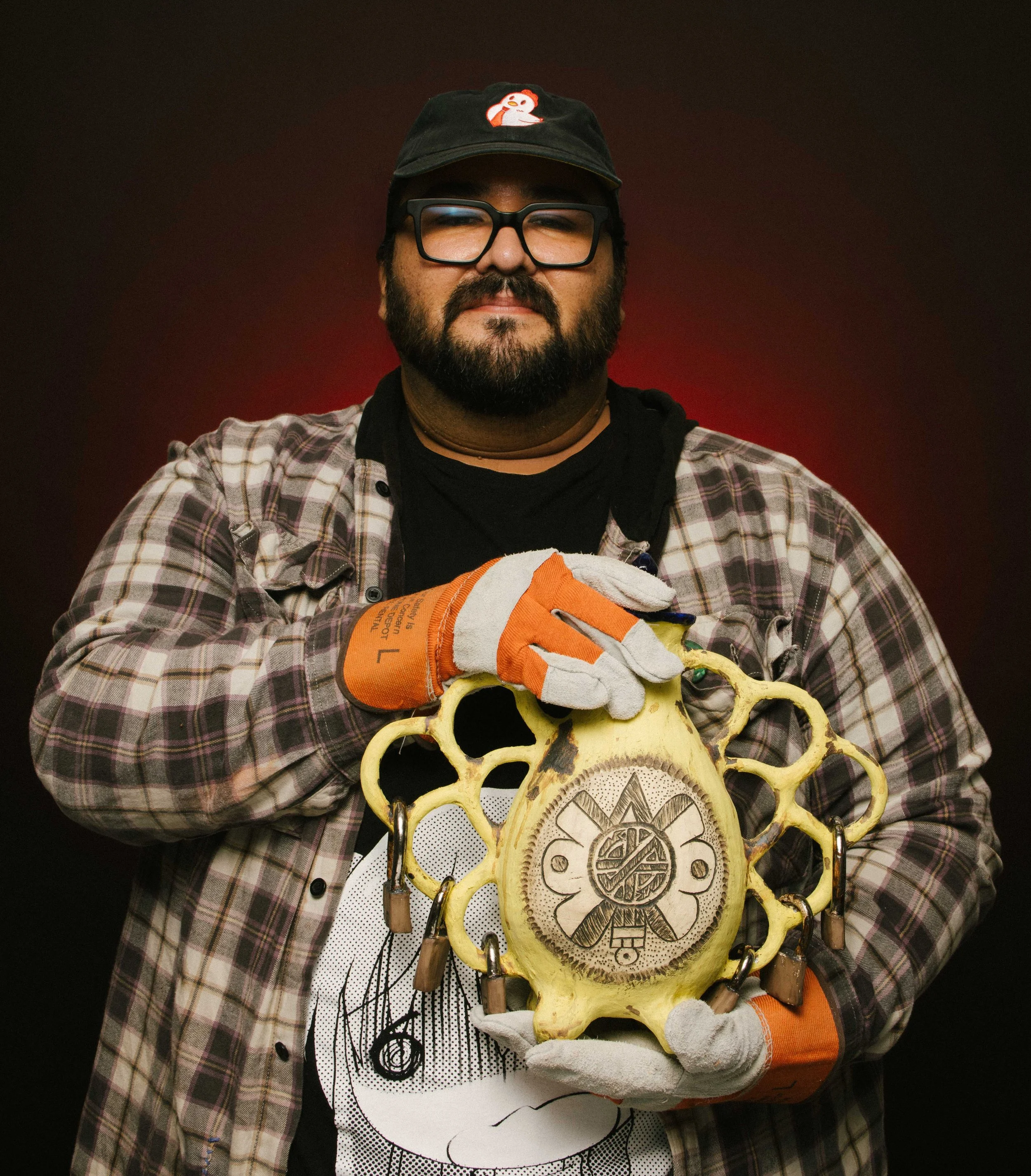
José Galván Martínez (b. 1988, Mexico City, MX)
Drawing parallels between urban decay and working-class communities, José Galván Martínez is a Chilango visual artist that explores the visuals of the urban experience through hand-built ceramics and textiles. His work yields from the assimilation to American culture, memories of his native Mexico, constant relocations and commutes.
Martínez’ childhood in Mexico City imprinted an early fascination with landmarks and urbanism, and the influence of his native country’s rich ceramic and textile culture is evident in his approach to the mediums. His work further explores Mexican dichos and refranes through video and performance.
He received a BA from California State University, Channel Islands (2023) before receiving his MFA from California State University, Northridge (2026).
Martínez participated in The Color Network’s 2024 Project M Residency at Watershed Center for the Ceramic Arts in Newcastle, ME and 2022 Ventura Potters Guild Summer Residency at Clay Zen Studios in Ojai, CA.
643 Project Space in Ventura, CA, presented a solo exhibition of Galván Martínez’s work titled Entre Colores, Recuredos y Sabores in 2022. His work has been included in group exhibitions including Made in California at Brea Gallery in Brea, CA (2026), GlaMFA at California State University, Long Beach (2026), and Split Ends at OCC Frank M. Doyle Arts Pavilion in Costa Mesa, CA (2025).
Martínez lives and works in Oxnard, California.
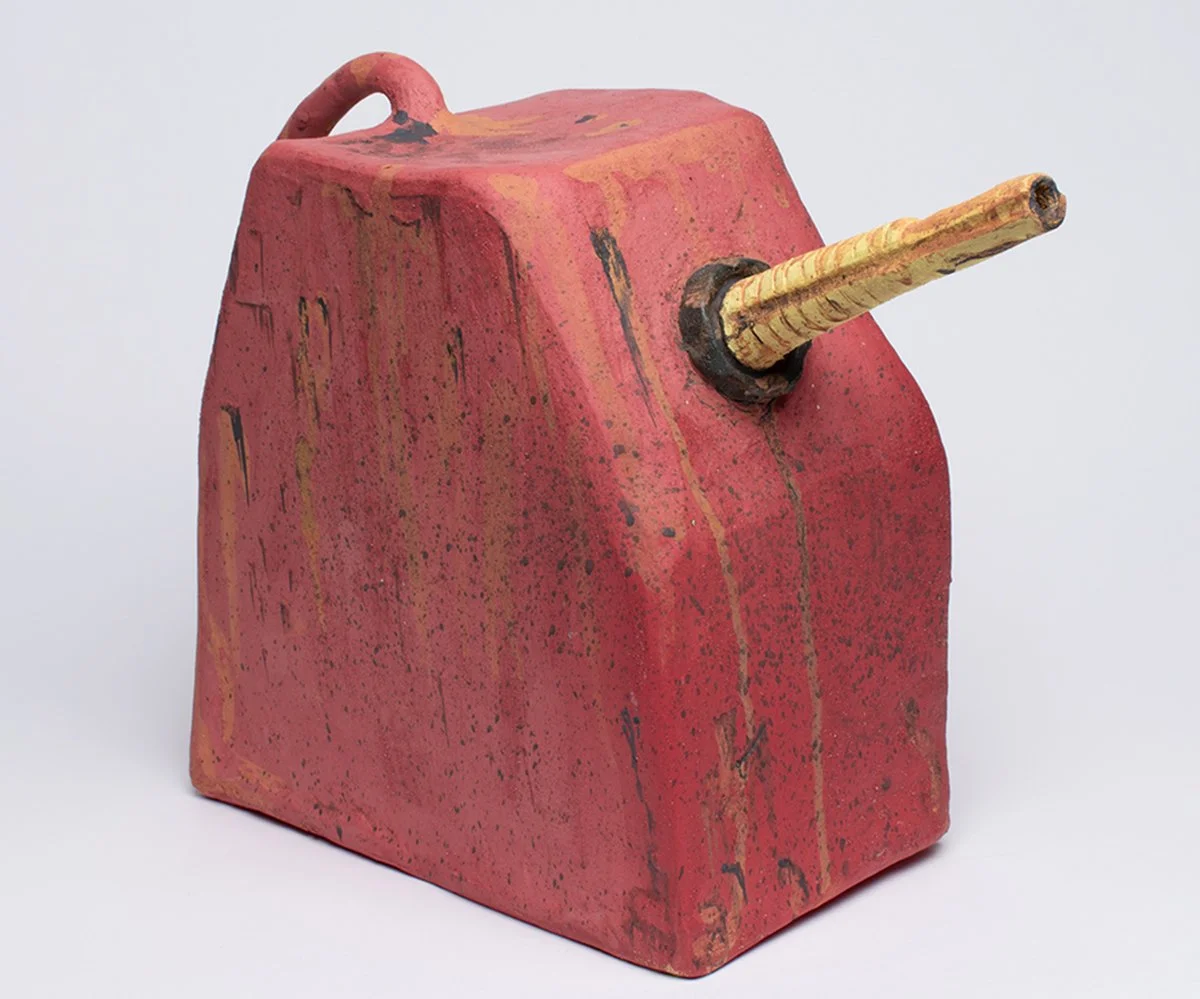
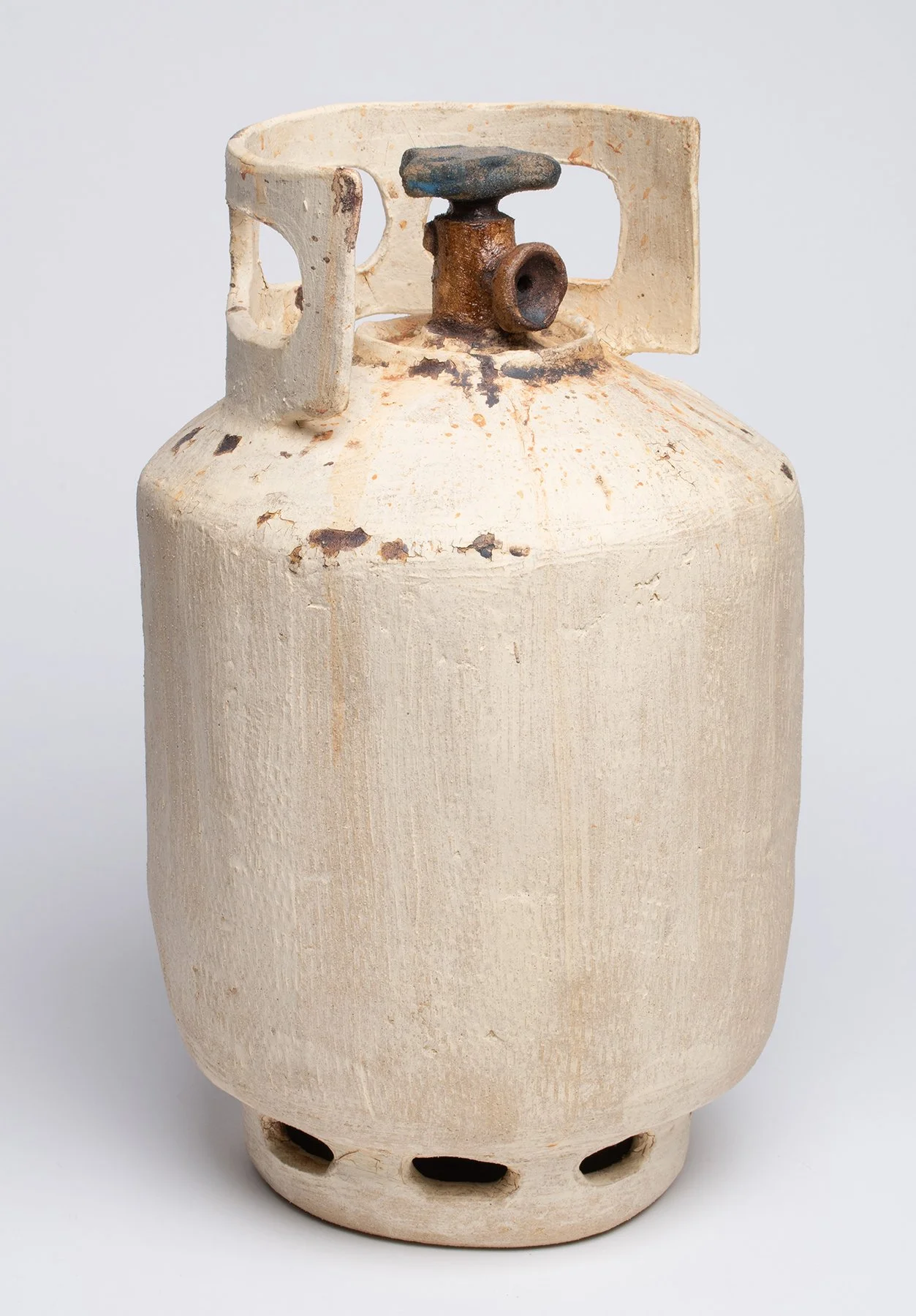
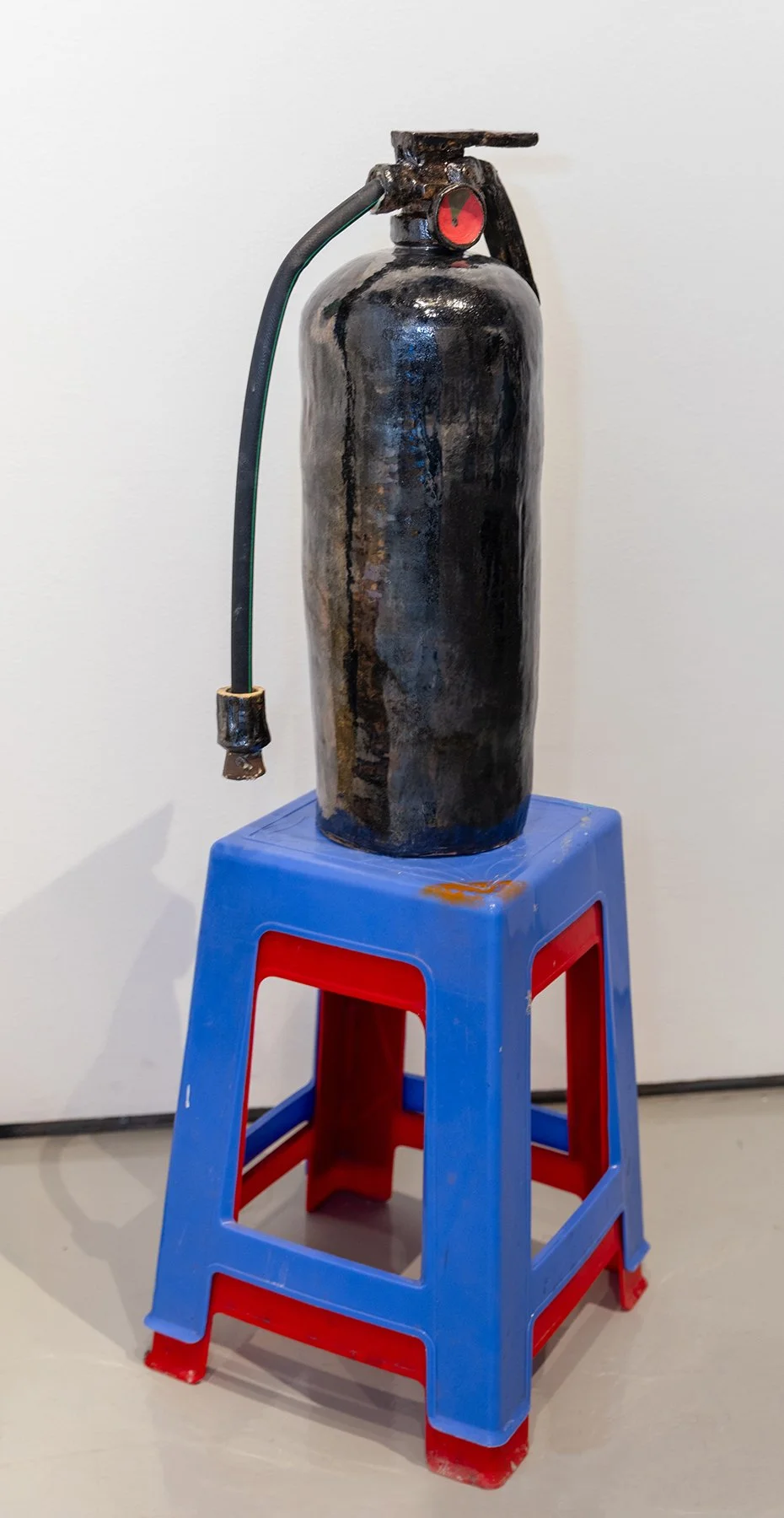
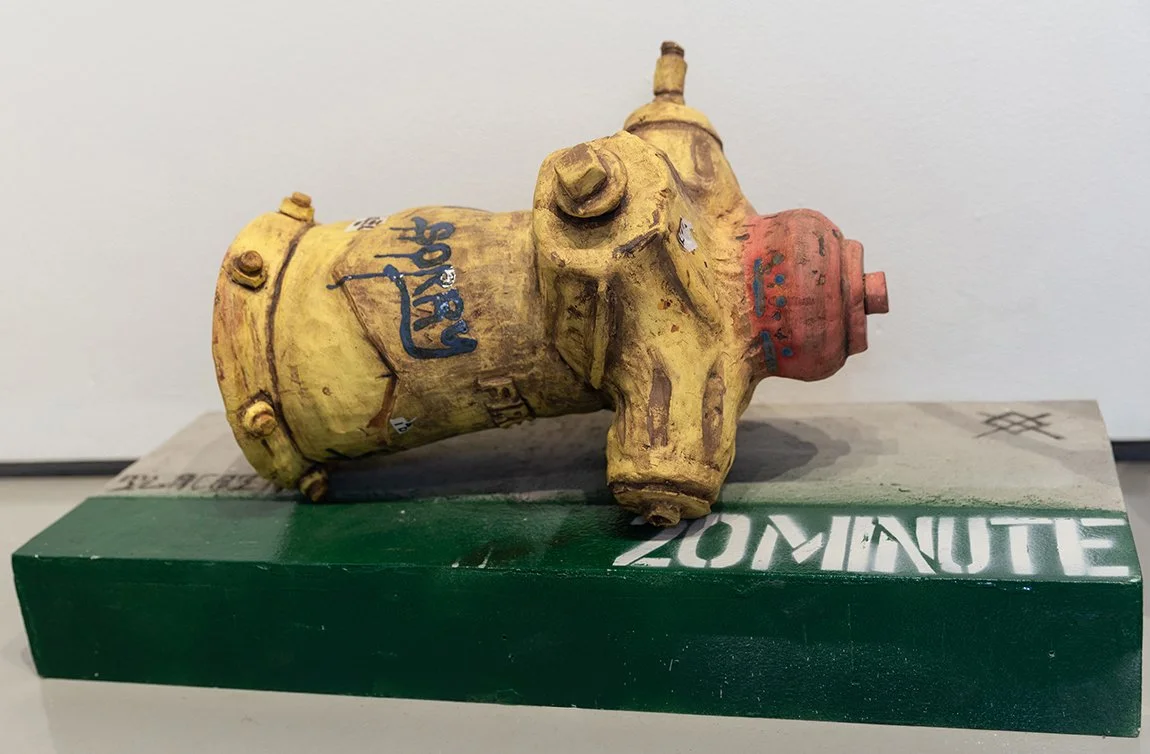
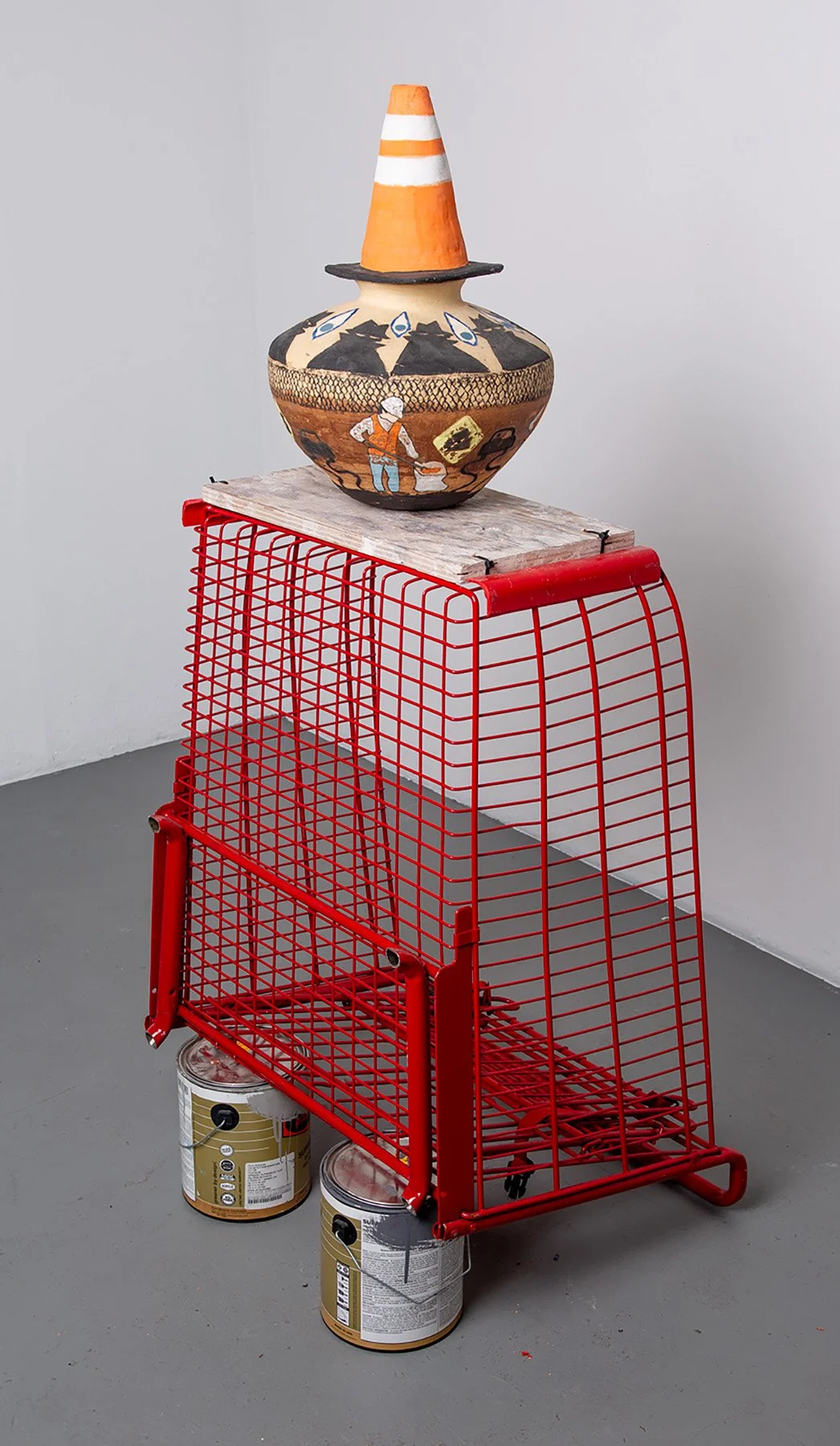
My art weaves together the outside environment, craft, and culture. Roughly laid coils with textured evidence of the maker’s hand are reminiscent of the walls in urban environments. Fabrics and fibers are sourced from the trash and stitched intuitively. Videos combine the outside with refranes and other proverbs.
Constant movement within and coverage of large urban areas requires constant observation, an activity rooted in my upbringing in Mexico City. Being a pedestrian and passenger, examining the landscape through the windows of buses, trains, and other vehicles have helped me navigate most surroundings with relative ease.
While neglect, deterioration and exposure to the elements can be construed as mere urban decay, they represent resilience and defiance. They speak of class, economics, and the gentrification of communities.