Hongmi Kim Hoog is a ceramic artist whose practice bridges Korean tradition and contemporary material exploration. She holds an MFA in Ceramic Art from The City College of New York, an MA in Studio Art from New York University, and a BFA in Ceramic Art from Ewha Womans University. Born and raised in South Korea, she draws inspiration from Korean ceramic heritage and from her mother’s quiet strength.
Working with Yeonlimun (연리문) and related layered-clay techniques such as agateware, neriage, and nerikomi, Hoog layers different clays and pigments into sheets that are cut and rebuilt into vessel forms. Rather than fully determining the final design in advance, she allows form and surface to emerge through process, giving each work its own movement, tension, and character. Drawn to rounded vessels for their associations with comfort, touch, and motherhood, she often contrasts their softness with rough or broken edges. Through this tension, her work reflects the coexistence of beauty and pain, care and loss, tenderness and resilience. Her recent works incorporate crystal glazes, layered mid- and low-fire surfaces, luster overglaze, and ottchil (옻칠, natural lacquer), creating luminous textures with depth, containment, and emotional resonance.
She completed a residency at Greenwich House Pottery in New York in 2023. Her work has been shown in juried, biennial, and group exhibitions in the United States and internationally, including the Jingdezhen International Ceramic Art Biennale in China, the Biennal de Ceràmica d’Esplugues Angelina Alós in Spain, the Guilford Art Center Ceramics Biennial in the United States, the Mediterraneo Contemporary Ceramics Competition in Italy, and Absence Takes Form, the NCECA Annual Exhibition in Detroit in 2026. She is also a recipient of the NCECA 2026 Multicultural Fellowship.
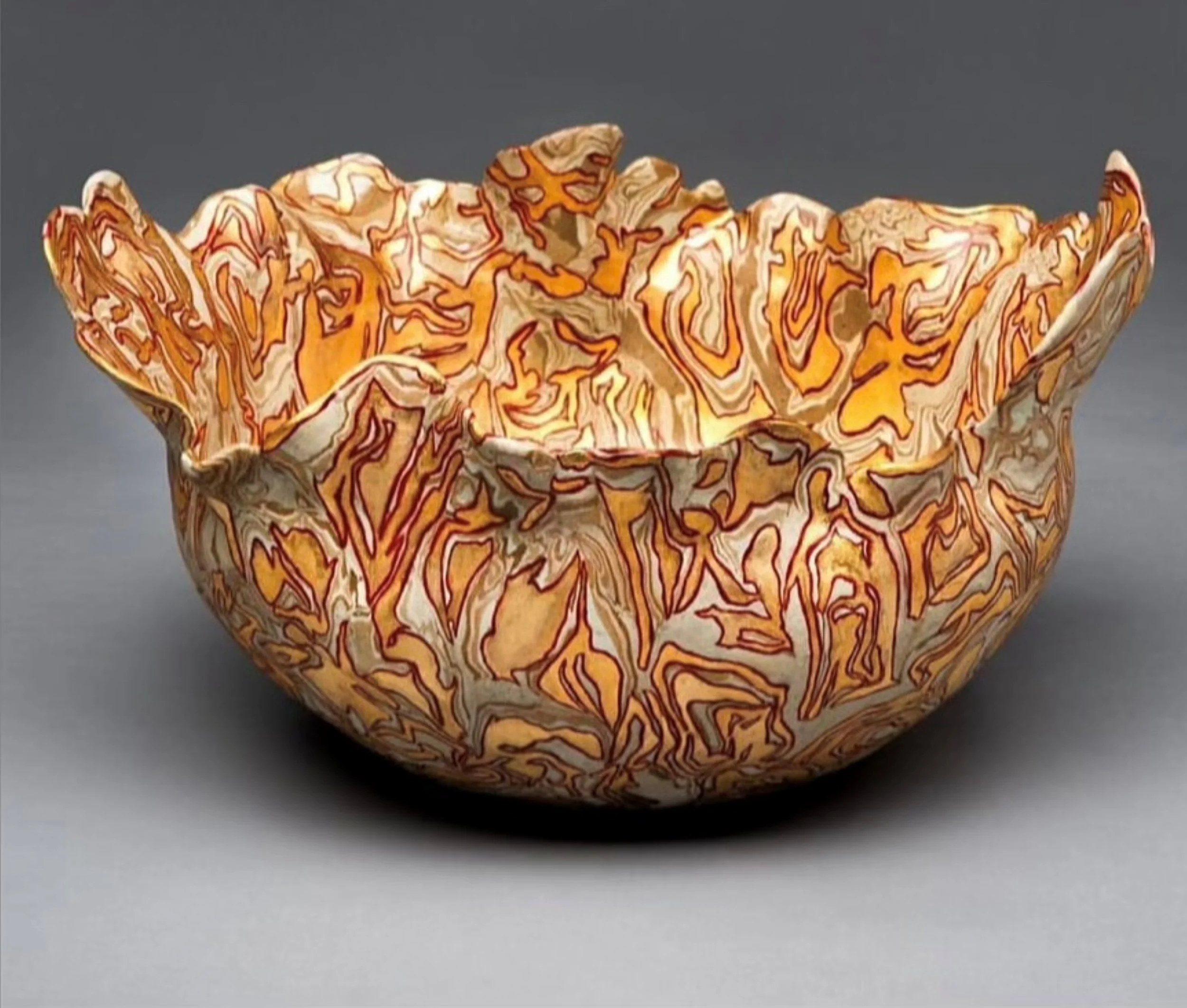
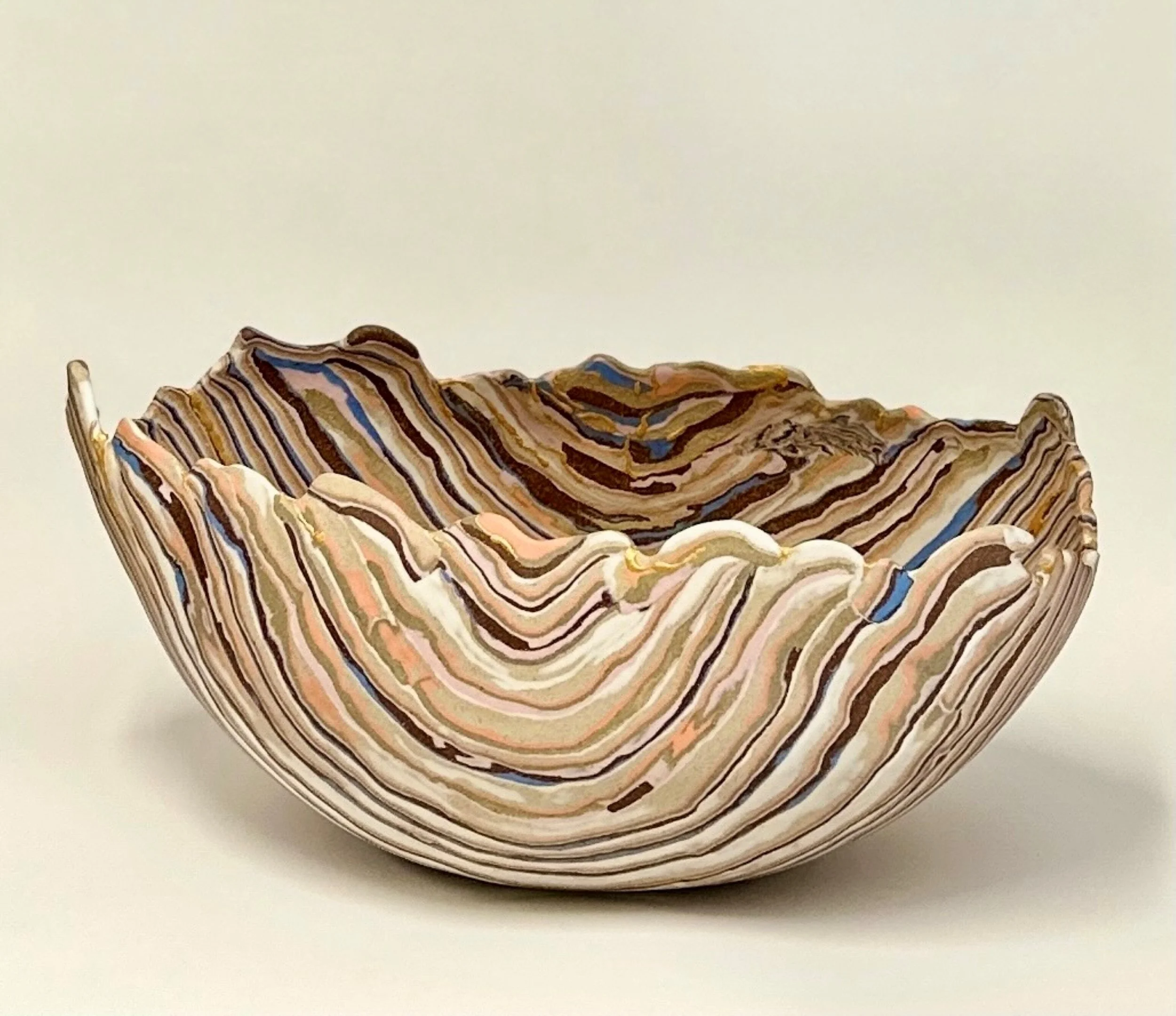
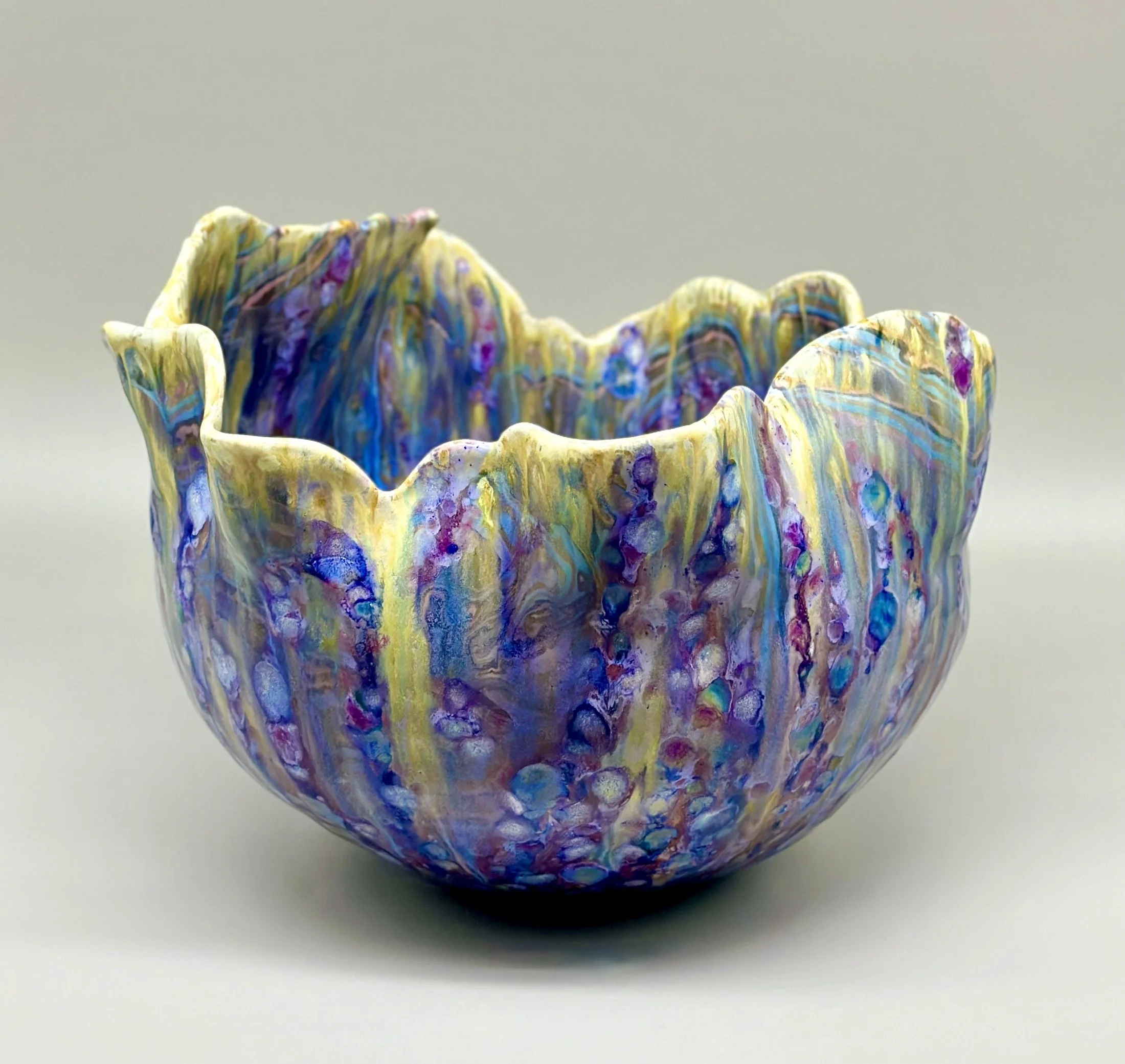
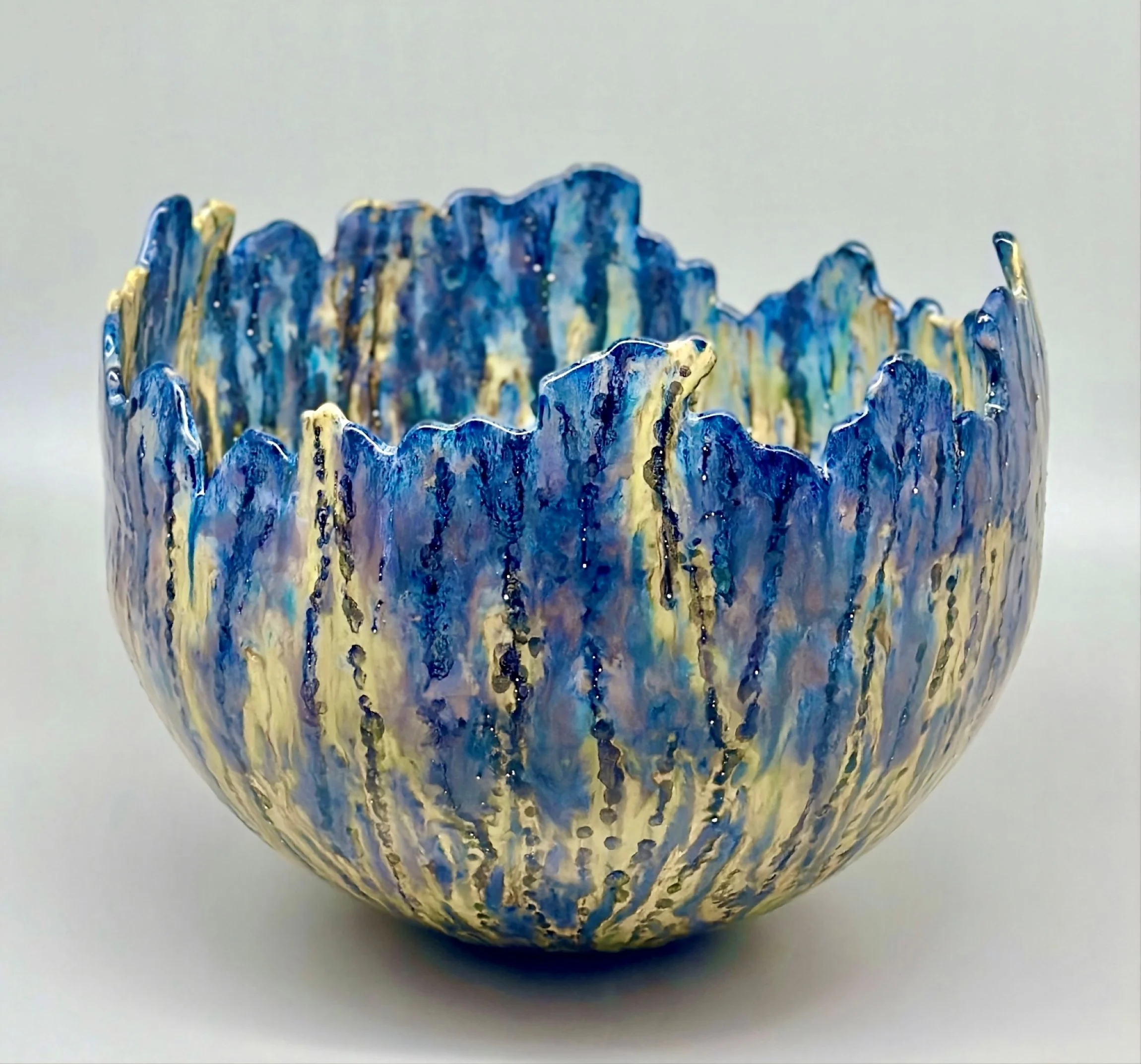
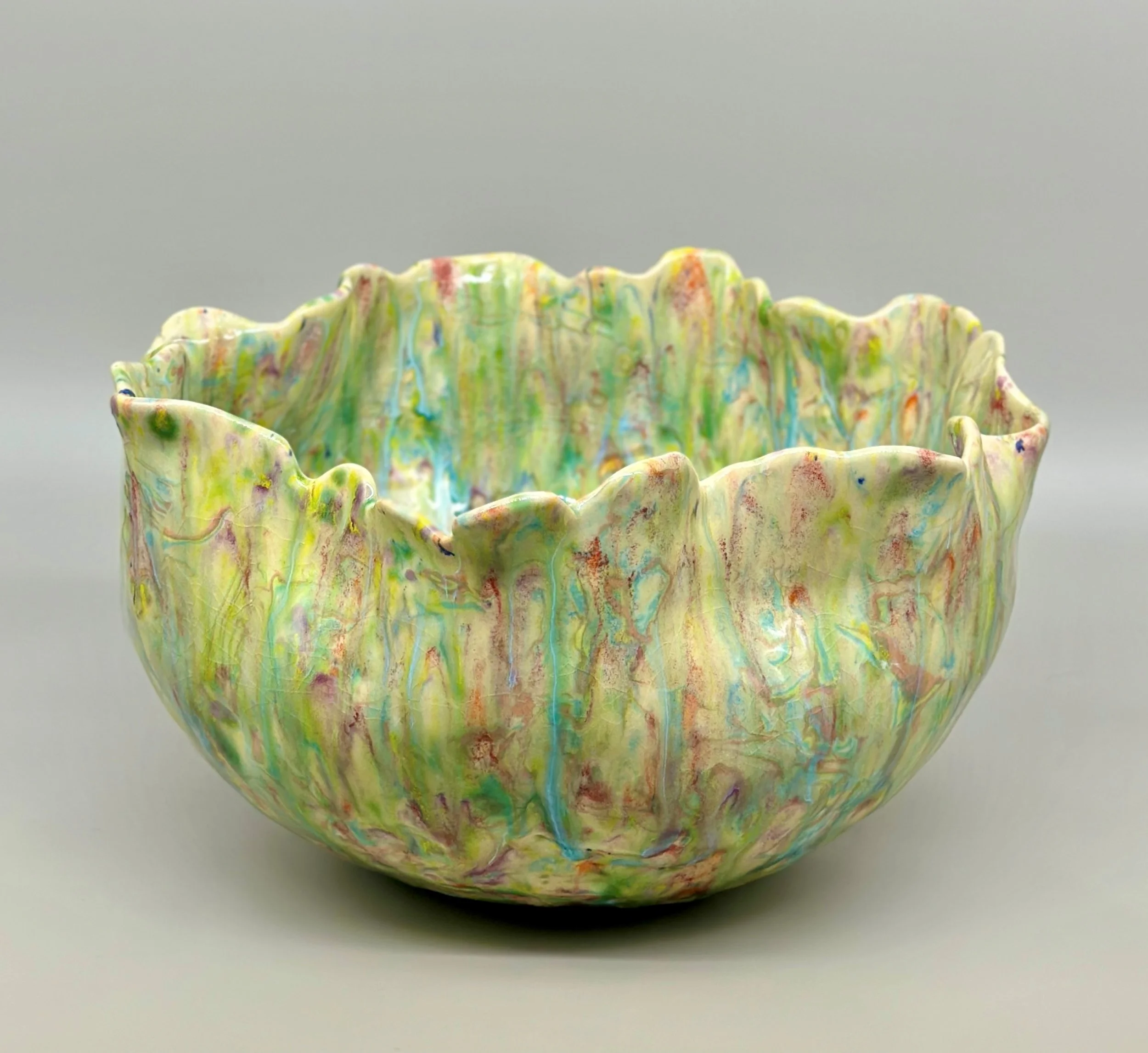
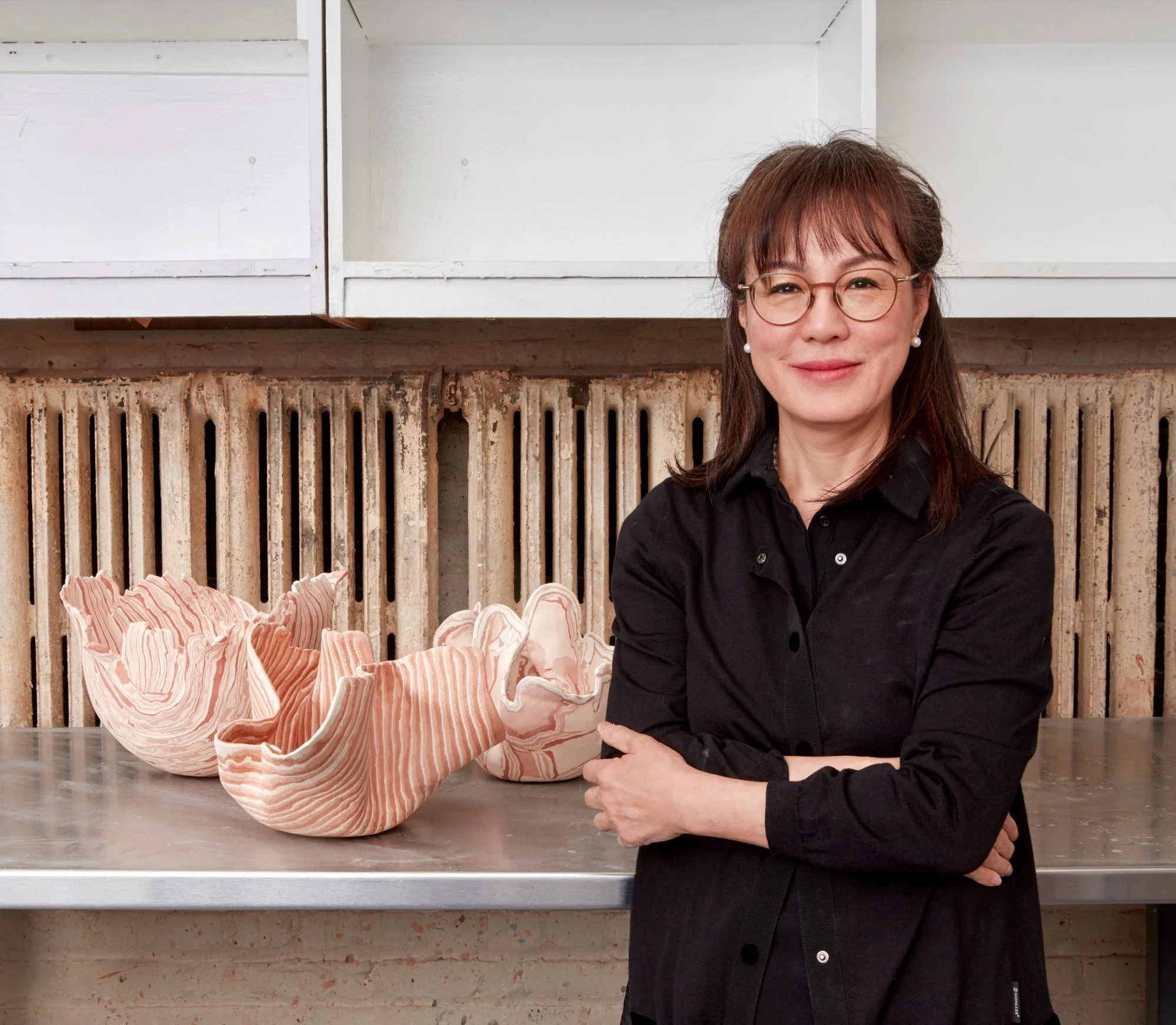
My work explores the vessel as a place of containment. Using layered porcelain, stoneware, and earthenware, I create forms that hold story, memory, emotion, and the complexity of human life. For me, the vessel is more than an object; it is a body that carries protection, vulnerability, strength, change, and the emotional depth of being human.
I begin by layering different clays and color pigments into a sheet, then cutting and rebuilding it through techniques related to Yeonlimoon (연리문), agateware, neriage, and nerikomi. I do not completely plan the final design. Instead, I allow the form to emerge through the process itself. This way of working gives each vessel its own movement, tension, and character, reflecting how human beings are shaped by time, experience, and feeling.
I am drawn to rounded vessel forms because they suggest comfort, touch, and motherhood. At the same time, I often leave edges rough or broken to contrast with the softness of the body. This tension is central to my work, reflecting how beauty and pain, care and loss, tenderness and resilience can exist together. I also use a range of glaze approaches, including layered mid-fire and low-fire surfaces, luster overglaze, and materials such as Ottchil (옻칠_natural lacquer), to create rich textures that add emotional depth to each piece.
The layers within each vessel become a metaphor for human life and the many emotions we carry within us—love, grief, hope, fear, healing, and endurance. Different clays, colors, and textures come together in one form, just as different experiences, identities, and emotions come together within society. Through this process, I hope to show that differences can create strength, beauty, and unity.
My work invites viewers to look closely and experience the vessel not only as a form, but as something that holds life within it.